It’s an emotional journey for parents after their child is diagnosed with hearing loss, as they are often unsure about the next steps. However, you are not alone! Besides, it’s a good thing that you got to know about your child’s hearing problems at an early stage – you can begin their hearing and speech rehabilitation journey at the right age. Confused? Keep reading to learn more about paediatric hearing loss, paediatric hearing tests, and different hearing aid options for children. We will also explain why early intervention is crucial for the speech, language, and overall development of newborns, toddlers, and young kids.
Paediatric Hearing Loss: A Brief Overview
Do you know that babies can hear even before they are born? That’s because the auditory system gets fully developed by around 25 weeks of pregnancy. Hearing is one of the vital senses that ensures a child’s speech, language, cognitive, and overall development. From the day a child is born, hearing enables them to connect to their surrounding world. Through hearing, they can recognise their parents’ voice, acquire speech and language skills, and build relationships with their peers or family members.
However, when hearing impairment goes undetected, it may result in speech and language delays, communication challenges, poor academic performance, social isolation, reduced confidence, behavioural problems, and, in some cases, even permanent cognitive challenges. Sadly, around 34 million children globally need proper hearing rehabilitation to address their disabling hearing loss. Additionally, about 60% of these cases could have been prevented through early hearing loss detection and prompt care and rehabilitation.
Paediatric hearing loss may either be congenital (present at birth) or acquired (developing over time). While congenital hearing loss may be caused by genetic defects, premature birth, or prenatal infections, acquired hearing loss may result from chronic ear infections, head or neck injuries, earwax buildup, or exposure to loud noises. Therefore, paediatric audiology tests are crucial for early detection of hearing problems and timely intervention for age-appropriate auditory, speech, and cognitive development.
Importance of Early Assessment and Intervention
Hearing loss in infants often goes undetected, which affects their speech, learning, and cognitive development. The symptoms may not appear clearly during the initial stages, which may result in poor communication and social skill development. Early hearing screening helps detect the early onset of hearing loss, enabling parents or caregivers to start hearing rehabilitation on time. Timely intervention also enables parents and audiologists to assess whether the child is responding well to hearing aids or cochlear implants. Therefore, early detection and timely hearing loss treatment are crucial to prevent any speech or language delays.
Paediatric Hearing Diagnostic Tests
Newborn hearing screening can help detect hearing problems present at birth, while auditory checkups via specialised tests (like Auditory Brainstem Response (ABR), Otoacoustic Emissions (OAE), or tympanometry) help audiologists evaluate hearing abilities in infants and toddlers, who are unable to respond to the conventional diagnostic tests. Besides, paediatric hearing tests help identify the child’s type (conductive, sensorineural, or mixed) and degree of hearing loss (mild, moderate, severe, or profound).
Here are some commonly used paediatric diagnostic tests that audiologists use to assess hearing issues of newborns, infants, toddlers, and young children.
Newborn Hearing Screening
Newborn hearing screening is usually conducted within the first few days after the child is born. It uses the automated hearing assessment methods, including:
- Otoacoustic Emission (OAE): It records and evaluates the echoes generated by the child’s cochlea every time sound is produced.
- Auditory Brainstem Response (ABR/BERA): It is an objective test that uses sensors to assess the brain’s response to different sounds. The ABR/BERA test is vital for detecting the child’s level of hearing loss.
- Automated Auditory Brainstem Response (AABR): It assesses how the child’s auditory nerves, together with the brainstem, respond to sound stimuli (mostly generated through clicks). AABR is a faster and automated version of ABR/BERA.
Both these tests are quick and painless and are typically done when the baby is asleep.
Conditioned Play Audiometry (CPA)
CPA is suitable for children between 2 and 5 years, who can participate in playful listening activities, such as dropping a block in the bucket or placing a ring on a cone, in response to a sound. In this way, the audiologist evaluates the child’s hearing thresholds by conditioning the child to perform an engaging task.
Pure Tone and Speech Audiometry
For older children (of school-going age), audiologists may perform pure tone audiometry and speech audiometry tests, which involve listening to various sounds, tones, and repetitive speech words played via headphones. The test helps determine the child’s hearing threshold levels and speech discrimination capabilities.
Tympanometry
Tympanometry is a quick, painless, and non-invasive hearing test that measures an individual’s middle ear function by assessing the eardrum’s (tympanic membrane) response to air pressure changes. It helps diagnose conductive hearing loss caused by factors like earwax accumulation, fluid build-up, and perforated eardrums.
Hearing Aids for Children: Choose the Right Device
After your little champ is diagnosed with hearing loss, hearing aids are the most preferred treatment option for child hearing loss. Before determining the right hearing device, your audiologist will consider several factors, like your child’s hearing loss type and degree, age, ear structure, speech and language development needs, lifestyle choices, and parental monitoring capabilities. Here are the most suitable hearing aid types for children:
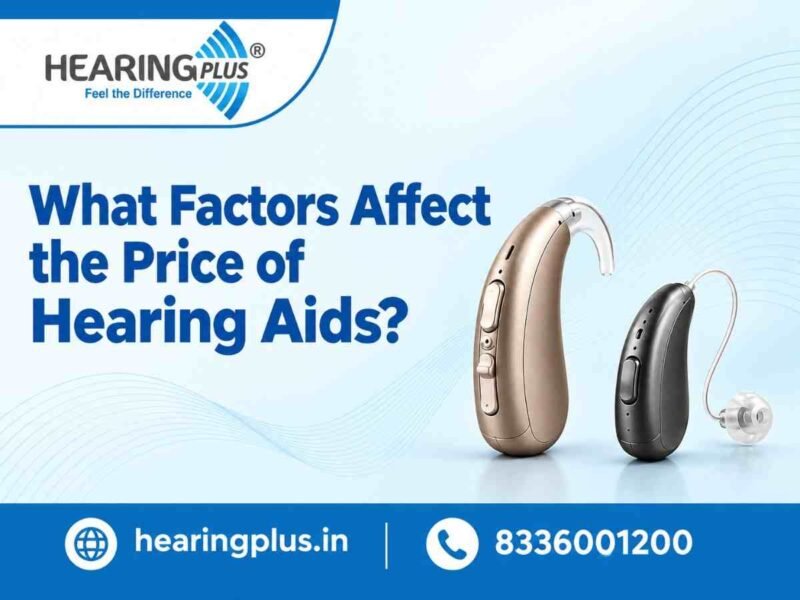
- Behind-the-Ear (BTE): BTE aids are most common among kids because they are adaptable to the child’s growth and developmental needs, and can be easily handled.
- Receiver-in-the-Canal (RIC): RIC aids are sleeker than BTE devices and are suitable for older children and teens who prefer more discreet yet powerful models.
- Bone Anchored Hearing Aids (BAHA): BAHA devices are ideal for children with conductive or mixed hearing loss (that is, when ear canal conditions prevent the fitting of conventional hearing aids) because they transmit sounds through vibration via the skull.
- CROS/BiCROS Devices: These are designed for treating unilateral hearing loss (UHL)/single-sided deafness (SSD) or asymmetrical hearing loss. These devices work by picking up sounds from the ‘weaker ear’ and sending them over to the ‘better ear’.
Conclusion
Remember that you are not alone! Although managing your child’s hearing problems may seem overwhelming at first, support is readily available. Consult professional audiologists who will provide expert guidance on the best paediatric hearing loss treatment solutions. A qualified hearing specialist will perform the required diagnostic tests, understand the unique child hearing loss symptoms, and suggest the best solution. Through a personalised care and rehabilitative program, the best hearing aid centre in Kolkata will ensure fruitful and effective hearing and speech developmental journeys for your child.